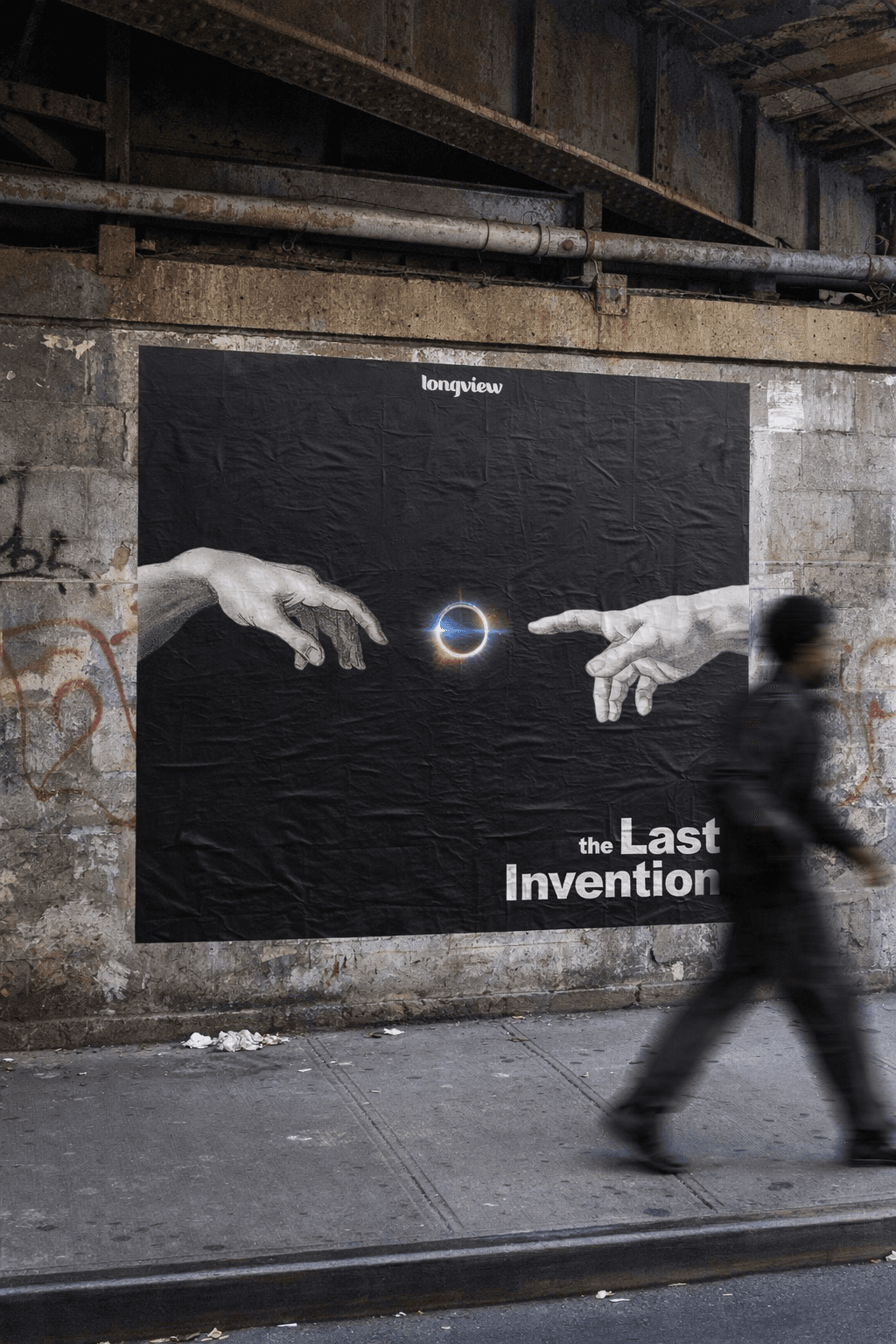

Hey all, it’s Gregory here. When Andy first pulled me in to work on The Last Invention, I thought my old friend had gone off the deep end. He was telling me about some truly sci-fi scenarios of our AI future, and he was asking serious people questions as wild as “What percentage do you put on the chance of AI causing human extinction?” (For no one was the answer near zero.)
Then I started doing my own reporting, and I found myself going right off the deep end, too. The more I learned, the more I wondered: How are so few people talking about this? Even if these transformative impacts were only potential, were they not worth discussing? Weighing for ourselves before that world is upon us?
It’s hard to report on something so speculative. You feel half-crazy sometimes. You don’t want to seem unserious as a reporter. You want to treat the concerns as credible, but not come off as credulous.
So I was heartened this summer, when I read a Substack post from Morning Edition’s Steve Inskeep. I’d worked a lot with Steve back in my NPR days, both in my time as an international correspondent and then as host of NPR’s Rough Translation. (Our work together came about in part because Morning Edition time slots are favorable to international time zones, but also because Steve is an insanely curious and knowledgeable guy.)
In that post, Steve revisited his recent interview with Pete Buttigieg. The interview got attention for reasons you might expect: his warnings to Democrats, his take on Jeffrey Epstein, his thoughts on trans kids in sports, etc. “Less noticed,” Inskeep wrote, “was Buttigieg’s warning about AI.” He then excerpts that portion of the interview:
“I think even now we are under-reacting in a big way politically and substantively to what this is about to do to us as a country,” Buttigieg tells him. “We’re talking about changes that might be bigger and faster than anything we’ve seen since the 17th century.”
What is it about our human brains that we can hear warnings like that and think that the big news is Buttigieg’s opinion on Epstein…and not his fears about the upending of the world?
It’s not just Buttigieg sounding the alarm. Today’s episode begins with Elon Musk, back in 2017, imploring a room full of US governors to regulate AI before it’s too late. “Mark my words: AI is far more dangerous than nukes,” he tells them.
We now know from leaked emails that less than a week before this speech to the governors, Elon had received a message from Ilya Sutzkever — one of the leaders at OpenAI, which Elon was then funding. The email spells out in shocking bullet points both AI’s transformative power (“The world…is not prepared for the drastic changes in capability”) and OpenAI’s path to dominance (“Lock down an overwhelming hardware advantage.”) That was 2017, five years before the release of ChatGPT. Folks at OpenAI already realized the power of this tech.
And so Elon took to the stage and asked US governors to regulate AI before it got too powerful to control. And the governors’ response?
You’ll hear that and more in today’s episode. But it’s a telling one. And it says a lot about the factors that got us to this moment. Not just technologists’ boundless ambitions. But our own boundless capacity to ignore.
To support our reporting into the most pressing, thorny, interesting debates and issues of our age, become a subscriber to Longview today.
-Gregory